
Flying Your Pet as Cargo: What Really Happens on Board?
It is the question every pet owner asks before an international move: what actually happens to my dog or cat in the cargo hold? Are they in the dark, in the cold, alone, stressed — or is the reality different from what we fear? This guide explains what pet air cargo is, how aircraft cargo holds actually work, what IATA requires, where the real risks lie (and they are not where most people assume), and what you can do to make the journey as safe as possible.
Fear vs. Reality: What the Cargo Hold is Actually Like
The mental image most people have of the cargo hold — dark, cold, deafening — does not match the conditions in the designated live animal compartment of a commercial passenger aircraft. Here is what the evidence and regulations actually say.
❌ Common Fears
- The hold is not pressurized
- The temperature drops to freezing at altitude
- The hold is completely dark the whole time
- No one knows if something goes wrong
- The crate falls over during turbulence
- The pet is completely alone with no contact
✅ What Is Actually True
- Passenger aircraft cargo holds are pressurized to the same level as the cabin
- The live animal hold is heated and temperature-controlled during the flight
- There is low ambient lighting in the hold — not complete darkness
- The pilot is notified and logs live animals on board; cargo systems monitor conditions
- IATA-compliant crates are designed to prevent shifting and tipping
- The hold is a quiet, relatively calm environment — less stimulation than being in a car
On passenger aircraft, the bulk cargo hold where live animals travel is pressurized to the same cabin altitude as the passenger area — typically equivalent to 6,000–8,000 feet (1,800–2,400 metres) — and is actively heated during the flight. This is not optional: it is required by aviation regulations. The risks in pet cargo transport lie elsewhere.
AVIH vs. Manifest Cargo: Two Very Different Things
When people say "flying a pet as cargo," they usually mean one of two different arrangements. Understanding the difference is essential.
AVIH — Animals in Hold (Accompanied)
AVIH means your pet travels on the same flight as you, booked through the passenger side of the airline as accompanied excess baggage. You check your pet in at the departures desk, and the animal travels in the hold below the cabin you are sitting in. AVIH has size and weight limits, varies significantly by airline, and is generally limited to domestic routes or short to medium international routes. Most airlines do not accept AVIH for pets on long-haul or multi-connection international routes.
Manifest Cargo (Unaccompanied Air Cargo)
Manifest cargo — sometimes called UAC (Unaccompanied Air Cargo) or live animal cargo — means your pet is booked through the airline's cargo division and travels as freight. This does not mean your pet travels on a freighter aircraft: in most cases, the animal is loaded onto the same type of commercial passenger aircraft, but in the cargo hold, on a flight that may or may not be the same one you are on.
Manifest cargo is the standard for most international pet relocations. It allows larger crates, more flexible routing, better coordination with destination country customs and import permits, and proper documentation. A certified pet relocation specialist manages the booking, coordinates the ground handling at both ends, and ensures the paperwork matches what the destination country requires.
Relocating Internationally with Your Pet?
A certified pet relocation specialist manages cargo booking, documentation, and ground handling — so your pet's journey is coordinated from door to door.
Get a Free Quote → Check My RouteThe IATA Live Animal Regulations: The Framework Behind Every Flight
Every commercial airline that transports live animals is expected to follow the IATA Live Animal Regulations (LAR). Published annually by the International Air Transport Association, the LAR covers everything: crate specifications, stacking rules, temperature limits, labelling, documentation, and species-specific handling instructions. The current edition is Edition 52, updated for 2026.
The LAR is the global baseline. Individual airlines may — and often do — set additional restrictions on top of the IATA minimum. A crate that meets IATA standards is not automatically accepted by all airlines. Always verify with the specific airline.
Airlines are not legally obligated to follow IATA LAR in the same way they are bound by civil aviation law, but almost all major carriers do — it is a condition of IATA membership and a standard that liability and insurance frameworks depend on. In practice, the LAR is the most important document governing how your pet is handled on a flight.
What Actually Happens: Step by Step
-
📋Acceptance — Several Hours Before Departure
For manifest cargo, your pet is accepted at the airline cargo terminal — a separate facility from the passenger terminal, usually on the other side of the airport. The certified agent presents the documentation: health certificate, import permits, CITES certificates if required, and cargo booking confirmation. Staff weigh and measure the crate, confirm the live animal label and water dishes are in place, and verify the paperwork matches. Most airlines accept live animals 3–5 hours before departure. Acceptance cut-off times are strict — miss it, and your pet misses the flight.
-
🏭Ground Holding — Before Loading
After acceptance, the crate moves to the airline's live animal holding area — a temperature-regulated room where animals wait until the flight is ready for loading. This is the highest-risk window for temperature stress: ground temperatures in summer at Gulf airports, Singapore, or any warm-climate hub can exceed 35°C. Most airlines have temperature protocols that trigger refusal or delay if ground conditions are too extreme. This is why temperature embargoes exist, and why departure time matters.
-
✈️Loading — Last On, First Off
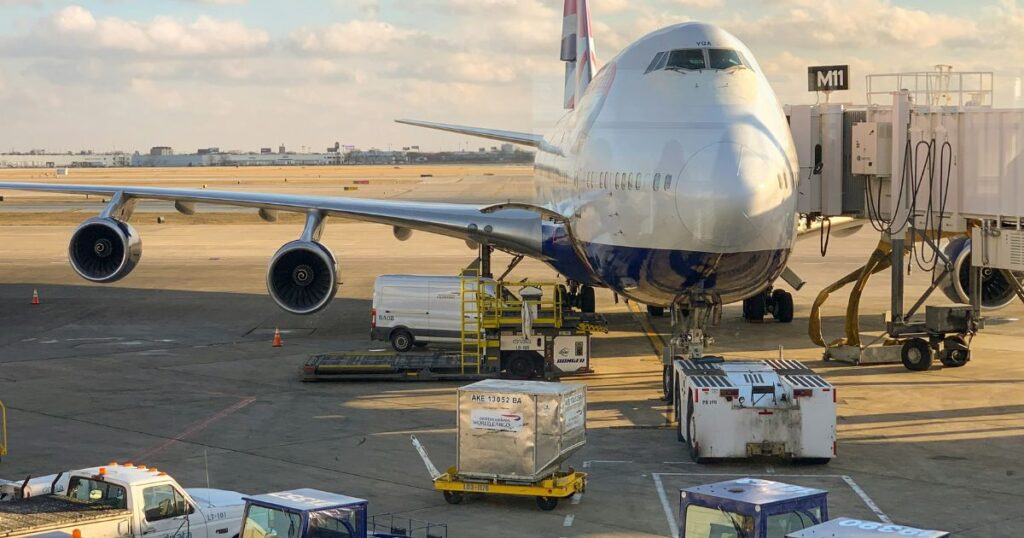
Live animals are loaded last onto the aircraft — this minimises time on the hot or cold tarmac — and unloaded first on arrival. The crate is secured in the bulk hold, which is a separate compartment from the main baggage hold. On narrow-body aircraft (single-aisle), there may be only one combined hold. On wide-body aircraft (A330, B777, B787, A350), the live animal compartment is typically separated and has dedicated heating circuits.
-
🛩️In Flight — Pressurized, Temperature-Controlled
During the flight, the cargo hold is pressurized to the same level as the passenger cabin and heated to a temperature consistent with live animal carriage — generally 15–25°C. The hold is not heated to human comfort temperature, but it is not cold. There is no mid-flight access to the hold. The pilot is informed that live animals are on board and this is noted in the flight manifest. For the vast majority of healthy animals, the in-flight period is the safest and least stressful part of the journey.
-
🔄Connection (if applicable)
At connecting airports, your pet is offloaded and moved to the airline's transfer animal holding area. For short connections (under 4 hours), this may simply be a temperature-controlled room at the cargo terminal. For longer connections, some airlines at major hubs have dedicated animal care facilities. Lufthansa at Frankfurt and Emirates at Dubai are known for established live animal handling infrastructure. No one opens the crate during transit except authorised veterinary staff in an emergency. This is why non-stop routes are always preferable, and why hub quality matters when choosing a routing.
-
🛬Arrival — Customs and Border Inspection
On arrival, the crate is unloaded first. For AVIH flights, you collect your pet from the live animal or oversized baggage counter once you have cleared customs. For manifest cargo, your pet goes to the cargo terminal and is processed by customs and the destination country's animal health border authority. Documents are verified, the animal is inspected, and if everything is correct, your pet is released. In countries with strict entry requirements — Australia, Japan, Singapore — this process involves an official veterinary inspection and can take several hours.
IATA-Compliant Crate: What the Regulations Require
The crate is the single most important thing you control in the cargo journey. An incorrectly sized or non-compliant crate can result in your pet being refused at acceptance — even if all the documentation is perfect. Do not use a soft-sided crate or a crate not designed for air cargo.
- 📐Size: The animal must be able to stand upright without its head touching the ceiling, turn around naturally, and lie down in a natural position. Measure your pet standing and add 10 cm in height, 15 cm in length.
- 🔒Construction: Rigid solid walls on at least three sides. The door must be solid and latch securely with bolts or clips that cannot be pushed open from the inside. Plastic bolt-through assembly is standard for larger crates.
- 🌬️Ventilation: Ventilation openings on at least two sides (typically three), covered with mesh. At least 16% of the total wall area must be ventilation openings on some airline specs.
- 💧Water and food dishes: Attached to the inside of the door, accessible for watering during transit without opening the crate. Two dishes minimum. Must not be removable from outside.
- 🟫Floor: Leak-proof floor covered with absorbent material (puppy pads, newspaper, or similar). The crate must have ventilation feet (raised slightly off the ground) to allow airflow under the unit.
- 🏷️Labelling: "LIVE ANIMALS" label on at least two sides, with "THIS WAY UP" arrows on all four sides. The animal's name, owner contact details, flight details, and feeding instructions must be attached to the top of the crate.
- 🔩Fasteners: All bolts, nuts, and screws must be present and secure. Most airlines require nuts and bolts rather than just clips, particularly for larger breeds.
An animal that has never been in a crate before will be significantly more stressed than one that has spent time in it, slept in it, and been fed in it over the weeks before travel. Crate training is one of the highest-impact things you can do to improve the cargo experience for your pet — and it costs nothing.
Brachycephalic Breeds: The Real Risk in Cargo
The single biggest risk factor in pet air cargo is not the cargo hold itself — it is brachycephalic (flat-faced) anatomy. Dogs and cats with shortened skulls and compressed airways — French Bulldogs, Pugs, English Bulldogs, Persian cats, British Shorthairs, and others — are significantly more vulnerable to respiratory distress under the conditions of cargo transport.
Why cargo is harder for brachycephalic breeds:
- Stress causes elevated respiratory rate — already compromised airways are pushed harder
- Heat retention: flat-faced breeds pant less efficiently and cannot self-regulate temperature as well
- Altitude equivalent in the cabin (6,000–8,000 ft) means slightly reduced oxygen — a minor issue for normal-airway dogs, a meaningful issue for severe BOAS cases
- Duration matters: stress effects accumulate over a long flight
The result: most major airlines restrict brachycephalic breeds in cargo, either by season, temperature, or outright prohibition. Some breeds that are on Singapore's approved list or the UK's permitted list cannot fly certain routes with certain airlines. This must be checked independently of destination country rules.
| Airline | Brachycephalic Dog Acceptance | Notes |
|---|---|---|
| Lufthansa | Below 27°C across full route | Comfort Pet cargo; temperature must be met at all points including connections |
| Emirates | November–March only | Seasonal embargo April–October for most brachycephalic breeds; some permanently refused |
| Etihad | November–March + BOAS assessment | Requires BOAS (Brachycephalic Obstructive Airway Syndrome) vet certificate in some cases |
| TAP Air Portugal | Not accepted | Brachycephalic breeds refused in cargo entirely |
| Turkish Airlines | Below 27°C condition | Temperature threshold applies to route, not just origin |
| Qatar Airways | Most refused | Most brachycephalic dog breeds not accepted; verify with cargo division |
| Swiss (SWISS) | Case-by-case / temperature | Verify with SWISS cargo before booking for brachycephalic breeds |
| British Airways | Temperature restrictions apply | Seasonal embargoes; verify cargo policy for specific breed before booking |
Airline policies for brachycephalic breeds can change without notice and vary by sub-breed, season, departure airport, and routing. Confirm in writing with the specific airline's cargo division before booking any flight. Do not rely on what was true last year, or what someone else's airline accepted.
Temperature Embargoes: When Airlines Refuse Pet Cargo
Airlines monitor ground temperatures at departure, connection, and arrival airports. When ambient temperature exceeds their threshold — typically 29°C to 35°C depending on the airline and species — the airline may refuse to accept live animal cargo. This protects animals from heat stress during the ground handling windows, where temperature control is least reliable.
Embargoes are particularly common:
- Summer months at Gulf airports (Dubai, Abu Dhabi, Doha) — May through October
- Summer at Asian hub airports (Singapore, Bangkok) — March through October for some airlines
- Winter at Northern European airports — extreme cold can trigger cold-weather embargoes
- Any route through an airport experiencing a heatwave
Temperature embargoes are not bureaucracy — they reflect a genuine risk to the animal's welfare during ground handling, which is the period when thermal control is most variable. When planning an international move during summer months, routing becomes a critical decision, not just a cost optimisation.
What Airline Staff Do (and Don't Do) In Flight
This is the question that worries most pet owners. The honest answer: once the aircraft is in the air, no cabin crew member has access to the cargo hold. The hold is a sealed, automated environment. There is no mid-flight welfare check by a staff member who goes downstairs to look at your dog.
What does exist: the cargo manifest shows the pilot that live animals are on board. Aircraft systems monitor hold pressure and temperature. In the event of a system alarm affecting the hold, the crew has protocols — but routine physical checks during flight do not happen.
This sounds alarming. It is less alarming in context: the cargo hold conditions are maintained by the same aircraft systems that maintain the passenger cabin. The hold environment during a normal flight is stable, pressurized, and not actively stressful for most healthy animals. The risk windows — where human oversight would actually matter — are on the ground: acceptance, loading, transit, and arrival. These are the points that experienced cargo handlers and certified pet relocation specialists focus on.
What You Can Do to Improve Your Pet's Cargo Journey
- Choose non-stop or single-connection routes. Every connection is an additional ground handling event — the highest-risk window. Non-stop is always preferable.
- Acclimatise your pet to the crate for weeks before departure. Meals, treats, and rest time in the crate reduce anxiety significantly.
- Do not sedate your pet. Sedation affects the respiratory system and thermoregulation. Sedated animals are at higher risk in cargo, not lower. Most airlines refuse sedated animals entirely.
- Avoid peak summer travel on routes through hot-climate hubs. Routing matters as much as destination.
- Attach frozen water to the dish, not liquid. Frozen water thaws during the journey and prevents spilling during handling.
- Do not over-feed before the flight. A light meal 3–4 hours before travel reduces the risk of vomiting and distress in the crate.
- Book early morning or evening flights. Ground temperatures are lower at these times, reducing the risk during loading and ground holding.
- Work with a certified pet relocation specialist. Cargo acceptance, documentation, ground handling coordination, and compliance with destination country requirements are complex. A specialist who does this daily has institutional knowledge that cannot be replicated by reading airline websites.
Frequently Asked Questions
Ready to Plan Your Pet's International Move?
A certified pet relocation specialist handles cargo booking, documentation, ground coordination, and destination-country compliance — so your pet arrives safely and legally.
Get a Free Quote → Check My Route