
What Is the RNATT? The Rabies Titre Test for International Pet Travel Explained [2026]
The Rabies Neutralising Antibody Titre Test — RNATT — is one of the most important and least understood requirements in international pet relocation. It's mandatory for travel to Australia, Japan, New Zealand, Singapore, UAE, and other destinations. Get it wrong, and your pet's travel plans are delayed by months. Get it right, and the rest of the process becomes much cleaner. This guide explains exactly what it is, which countries require it, how long you must wait, and what happens if your pet fails.
What Is the RNATT?
RNATT stands for Rabies Neutralising Antibody Titre Test. It is also called the Rabies Titre Test or the FAVN test (Fluorescent Antibody Virus Neutralisation). All three names refer to the same procedure.
The test measures whether your pet's immune system has produced enough antibodies in response to a rabies vaccination. It does not test for the presence of the rabies virus — it tests for the immune response. A pet that has been vaccinated but has not mounted an adequate antibody response will fail the test, even with a valid vaccination certificate.
Countries like Australia, Japan, and New Zealand are rabies-free. They use the RNATT as the gold standard of proof that a pet cannot introduce rabies across their border. A vaccination certificate alone is not sufficient — the test independently confirms the vaccination worked.
The Minimum Threshold
The universally accepted minimum result is ≥ 0.5 IU/ml (International Units per millilitre). This applies to every country that requires the test. A result of 0.49 IU/ml is a fail. There are no partial passes and no exemptions based on proximity to the threshold.
Which Animals Need It?
The RNATT applies to both dogs and cats. There is no species exemption. Both must undergo the test when travelling to a country that requires it.
Which Countries Require the RNATT?
The RNATT is not required for most destinations — but the countries that do require it include some of the world's most popular relocation destinations. Here is the current picture for 2026:
| Destination | RNATT Required? | Waiting Period | Who Must Test | Notes |
|---|---|---|---|---|
| Australia | ✅ Yes — mandatory | 180 days | All pets from Group 3 countries (incl. EU, USA, Canada, Singapore, Japan, UAE, South Africa) | Group 1 (NZ) and Group 2 (UK, Ireland, Hawaii) are exempt |
| Japan | ✅ Yes — mandatory | 180 days | All pets from non-designated regions (most of the world) | Two rabies vaccinations required before blood sampling; mRNA vaccines NOT accepted |
| New Zealand | ✅ Yes — mandatory | 90 days | All pets from Group 3 countries (incl. EU, USA, Canada, Singapore, Japan, UAE, South Africa) | Group 1 (Australia) and Group 2 (UK, Ireland, Hawaii) are exempt |
| Singapore | ✅ Yes — mandatory | 90 days | All pets from approved countries | From 1 April 2026, import clearance must be done by AVS-approved agent |
| UAE (Dubai / Abu Dhabi) | ⚠️ Depends on origin | 90 days (if required) | Pets from countries classified as rabies-risk by WOAH | Verify your country's current WOAH/WAHIS classification before starting |
| EU (entry from high-risk countries) | ⚠️ Depends on origin | 90 days (if required) | Pets entering the EU from countries not listed as rabies-free | EU-resident pets travelling within EU are exempt |
| UK | ❌ Not required | — | — | Standard vaccination and tapeworm treatment required |
| USA | ❌ Not required | — | — | CDC Dog Import Form and USDA-endorsed health certificate required |
| Canada | ❌ Not required | — | — | Rabies vaccination required; relatively straightforward process |
The RNATT requirement and approved laboratory lists are updated by governments without broad announcement. The information above reflects June 2026 status. Always verify current requirements before starting the process.
The Correct Sequence: What Must Happen Before the Blood Test
The most common and costly mistake pet owners make is drawing blood for the RNATT at the wrong time. The correct sequence is fixed and non-negotiable:
-
1Microchip first
The ISO-standard microchip (ISO 11784/11785, 15-digit) must be implanted before any vaccination. If the vaccination was given before the microchip, the vaccination cannot be linked to the pet's identity and does not count.
-
2Rabies vaccination(s)
Japan requires a minimum of two vaccinations — the second at least 30 days after the first. Australia requires a valid primary vaccination course. All destinations require the vaccination to be within its validity period when the blood sample is drawn.
-
3RNATT blood sampling
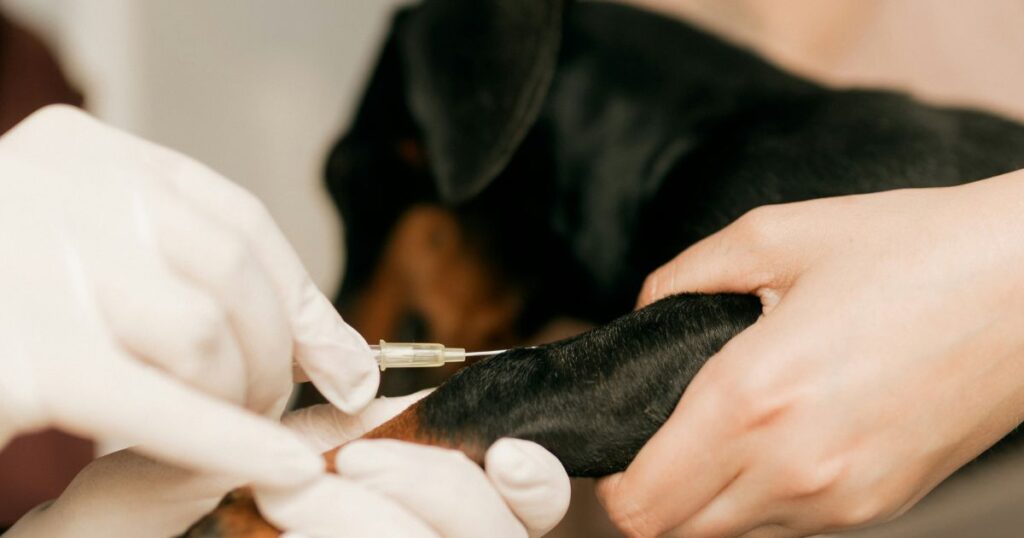
The blood sample is drawn at a vet clinic. The sample is then sent to an approved laboratory. For Japan, the sample can be taken on the same day as the second vaccination. The date of blood sampling is Day 0 of the waiting period.
-
4Result confirmed ≥ 0.5 IU/ml
The laboratory issues a result (typically within 2–4 weeks). A result of ≥ 0.5 IU/ml is a pass. The waiting period (180 or 90 days) begins from the date the blood was sampled — not the date results were received.
-
5Waiting period
The pet must not travel to the destination country until the full waiting period has elapsed. For Australia and Japan: 180 days from blood sampling. For New Zealand, Singapore, UAE: 90 days. This period cannot be shortened.
The 180-Day Wait vs. the 90-Day Wait
180 Days — Australia and Japan
Australia and Japan operate the strictest waiting period in the world. Once the blood is drawn and a passing result confirmed, the pet cannot enter either country for 180 days from the date of blood sampling. This is calculated from Day 0 (the day the blood was drawn), not from when results arrived.
For Japan specifically: if a pet arrives before Day 180 has elapsed, it will be detained at an Animal Quarantine Service facility for the remaining period. All costs — boarding, feeding, veterinary care — are the owner's responsibility. Detention can run to thousands of euros.
Japan does not accept mRNA-type rabies vaccines for the RNATT process. Only inactivated (killed) or recombinant vaccines are permitted. Verify your vaccine type with your veterinarian before administering it — if the wrong vaccine is used, the entire protocol must restart.
90 Days — New Zealand, Singapore, UAE
New Zealand (Group 3 countries), Singapore, and the UAE require a 90-day wait from the date of a satisfactory RNATT result. While shorter than 180 days, 90 days still represents approximately 3 months added to your relocation timeline — and this is before factoring in vaccination schedules, permit applications, and quarantine bookings (NZ).
Approved Laboratories: Not All Labs Are Equal
Each destination country maintains its own list of approved laboratories. Sending a blood sample to a lab that is not on the approved list for your destination will result in a rejected RNATT result — which means the entire process must restart.
| Destination | Approved Laboratory Requirement | Where to Find the Current List |
|---|---|---|
| Japan | MAFF-designated laboratories only | MAFF Animal Quarantine Service website |
| Australia | DAFF-approved laboratories | Australian Government DAFF import requirements |
| New Zealand | MPI-approved laboratories | MPI New Zealand — Importing Cats and Dogs |
| Singapore | Singapore AVS-approved laboratories | AVS / NParks Singapore |
| UAE | WOAH/OIE-approved laboratories generally accepted | MOCCAE UAE and verify with destination authority |
As of July 2025, Biobest Laboratories Ltd has been removed from the MAFF-designated laboratory list for Japan. RNATT results from Biobest are no longer accepted for Japan pet import. If you obtained a result from Biobest and are planning Japan travel, the test must be repeated at a currently approved laboratory. Confirm the current approved lab list directly with MAFF before booking any test.
A certified pet relocation specialist will confirm which specific laboratory to use for your origin country and destination, and will ensure the test is booked correctly. This is not a step to improvise — a single lab error can set the process back by months.
What Happens If Your Pet Fails the RNATT?
A failed result (below 0.5 IU/ml) does not mean your pet cannot travel — it means the timeline extends further. The steps are:
- Consult a veterinarian to review the vaccination protocol. The pet may need a booster vaccination or a revised vaccination schedule.
- Allow the vaccine to take full effect (at least 30 days for a booster, depending on protocol).
- Repeat the RNATT at an approved laboratory.
- Once a passing result (≥ 0.5 IU/ml) is confirmed, the waiting period (180 or 90 days) begins from the date of the new blood sample.
A failed RNATT cannot be appealed. There is no grace period or borderline exemption for results just below 0.5 IU/ml. The process must restart from the point of re-vaccination and re-testing. This adds a minimum of 3–6 months to the overall timeline, depending on destination.
Reasons a Pet May Fail
Common reasons for a failed RNATT include: the vaccination was not effective (wrong type, stored incorrectly, administered when the pet was immunocompromised), the vaccination was too recent (immune response not yet developed), the blood sample was drawn before the second required vaccination, or the pet has an underlying immune condition. A vet review after a failed result is essential.
How Long Is the RNATT Result Valid?
Result validity is not uniform across all destinations:
- Japan: The RNATT result is valid for 2 years from the date of blood sampling, provided the rabies vaccination remains continuously valid throughout. If the vaccination lapses, the titre test result is void and the full process must restart.
- Australia and New Zealand: The result validity is tied to maintaining a continuous chain of valid rabies vaccinations. A lapsed booster can invalidate the result.
- UAE and Singapore: The result is generally considered valid for the life of the pet if vaccinations are kept current.
If your pet's rabies booster falls out of date after a passing RNATT — even briefly — the result may be considered invalid by the destination country. This is one of the most common and avoidable reasons for having to restart the process from scratch. Set calendar reminders for all booster due dates.
Does Your Pet Need the RNATT?
Use the Pet Travel Checker to find out exactly which steps apply to your route — including whether the titre test is required and when to start.
Check Your Route → Get a QuotePlanning Your Timeline Around the RNATT
The RNATT waiting period is the single biggest constraint in any pet relocation involving Australia, Japan, New Zealand, or Singapore. It cannot be shortened, it cannot be waived, and it is not flexible. Everything else in the process — permits, health certificates, quarantine bookings — can be managed within the waiting period window. The titre test is the clock.
The recommended approach is to book the RNATT blood test as early as possible after the pet's vaccination protocol is complete — ideally the same day as the last required vaccination (permitted for Japan and Australia). Every week of delay in doing the test is a week added to the end of the overall timeline.
| Destination | Earliest to Start Full Process | From RNATT Blood Draw to Entry | Total Minimum Timeline |
|---|---|---|---|
| Australia | As early as possible — microchip → vaccine → blood draw | 180 days minimum | 7–9 months |
| Japan | Microchip → 1st vaccine → 30 days → 2nd vaccine → blood draw | 180 days from blood draw | 7–8 months |
| New Zealand | Microchip → vaccine(s) → blood draw | 90 days from passing result | 5–7 months |
| Singapore | Microchip → vaccine(s) → blood draw | 90 days from passing result | 4–6 months |
| UAE | Microchip → vaccine(s) → blood draw (if required) | 90 days (if required) | 4–6 months (if RNATT applies) |
These timelines assume a first-attempt pass on the RNATT, no complications with permits, and standard processing times. A failed titre test, lapsed vaccination, or incorrect laboratory can add 3–6 months to any of these estimates.
Frequently Asked Questions
Planning a Move to Australia, Japan or New Zealand?
A certified pet relocation specialist will manage the full RNATT process — lab selection, blood draw timing, documentation chain, and waiting period planning — so nothing goes wrong.
Get a Free Quote → Check Your RouteOfficial Resources
- 🇯🇵 Japan — MAFF Animal Quarantine Service — Import Requirements
- 🇯🇵 Japan — MAFF — Designated Laboratories for RNATT
- 🇦🇺 Australia — Australian Government DAFF — Importing Cats and Dogs
- 🇳🇿 New Zealand — MPI New Zealand — Importing Cats and Dogs
- 🇸🇬 Singapore — AVS Singapore — Animal Import Requirements
- 🌍 International — WOAH WAHIS — World Animal Health Information System (check country rabies classification)